On this page
Subscribe to receive the latest blog posts to your inbox every week.
By subscribing you agree to with our Privacy Policy.
Modern commercial buildings are intricate ecosystems, boasting complex HVAC systems with thousands of components. Maintaining optimal performance and efficiency in these environments is a significant challenge. Traditional preventive maintenance, completed every few years, or reactive maintenance–completed after equipment fails– often fall short in ensuring consistent performance and tenant satisfaction. This is where ongoing commissioning steps in as a game-changing approach, revolutionizing building maintenance.
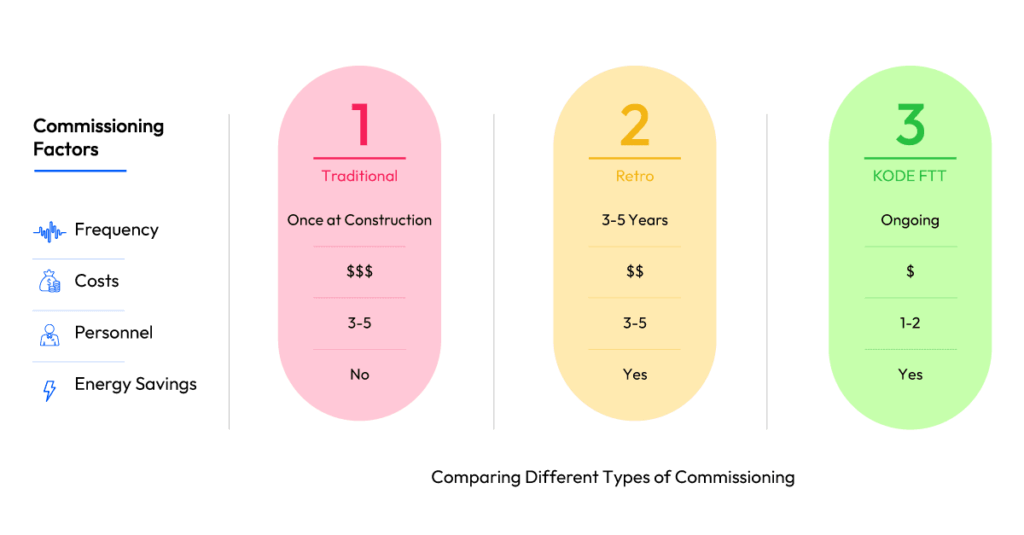
Traditional commissioning, whether performed during initial construction or through periodic retro-commissioning, offers a momentary assessment of a building’s equipment performance. This approach relies on testing a small sample of equipment components and making broader assumptions about the lifespan of the entire equipment at a specific point-in-time. While useful, these methods often miss issues that arise between testing periods, leading to reactive problem-solving after tenant discomfort and equipment inefficiencies have already occurred.
Ongoing commissioning, on the other hand, involves ongoing testing and monitoring of a building’s systems. This proactive approach allows facility managers to identify and address emerging faults and inefficiencies before they escalate into significant problems.
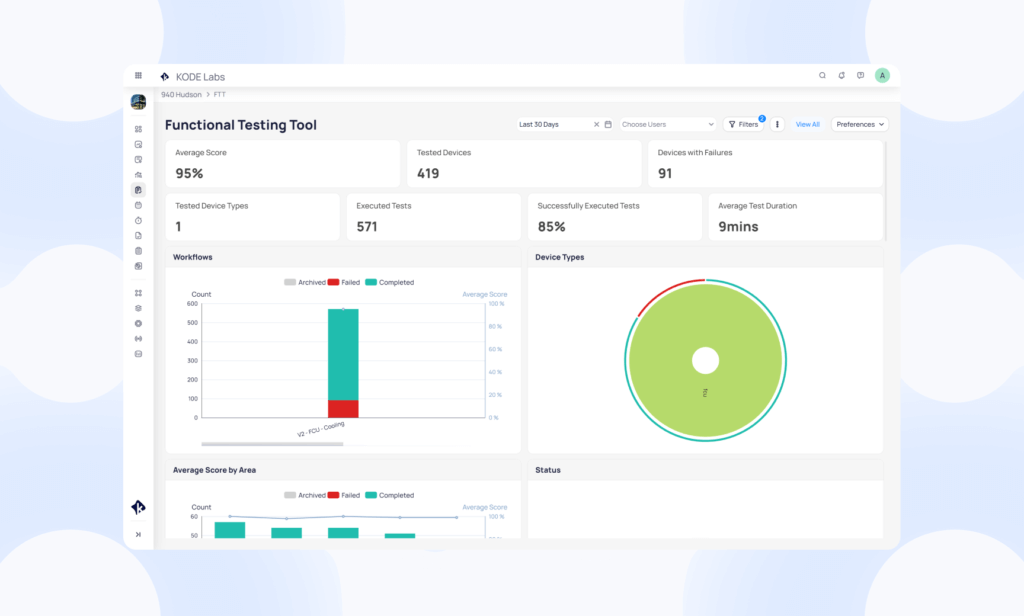
KODE Ongoing Commissioning takes a different approach to maintenance with its Functional Testing Tool (FTT). This automated, self-serve platform streamlines the commissioning process, making it more efficient and less reliant on external commissioning agents.
Some of the key benefits of Ongoing Commissioning for portfolio operators include:
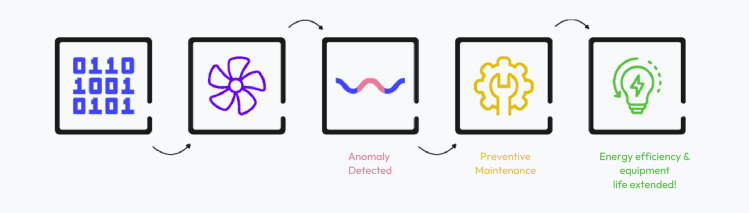
Ongoing commissioning not only improves operational efficiency and tenant satisfaction, but also has a substantial financial impact. By reducing the frequency of major equipment failures and extending the lifespan of building systems, maintenance and costs are lowered, by up to 15%.
This proactive approach to maintenance is a necessary evolution in the commercial real estate industry, ensuring buildings are well-maintained, energy-efficient, and ready to meet the demands of modern tenants. Additionally, energy savings from efficient equipment operation contribute to lower overhead costs, enhancing the overall profitability of commercial properties.

Michael Kovalcik
Product Management, KODE Labs
News, insights and resources from the world of smart building management.
By clicking "Sign Up" you're confirming that you agree with our Terms and Conditions.
Originally posted on Mann Report Ask your facility manager how many vendors currently have remote access to your building. Most…
Read more
Originally published on Facility Executive. Integration and expanded policy mean federal building management platforms now require the same heavy security…
Read more
Originally published on The Capitol Forum. “When we began pursuing FedRAMP High authorization, we assumed the biggest challenge would be…
Read more