The latest from KODE
Your resource to everything you need to know about smart building operating systems
Resources

Utility data was never designed for today’s real estate portfolios.
As sustainability expectations rise, reporting requirements expand, and portfolios scale globally, many organizations still rely on disconnected portals, PDFs, spreadsheets, and manual workflows to manage utility data. The result:
For enterprise teams, this creates real risk: unreliable reporting, missed savings, and slower decision-making, exactly where confidence matters most.
EnerG didn’t start as a feature roadmap.
It started as a client problem.
Over the past 15 months, KODE Labs worked closely with enterprise real estate organizations and partners navigating growing complexity across utility, sustainability, and financial reporting.
Teams already trusted KODE OS to unify building operations, and asked for the same level of transparency, auditability, and scalability applied to utility data.
EnerG was built from this collaboration.
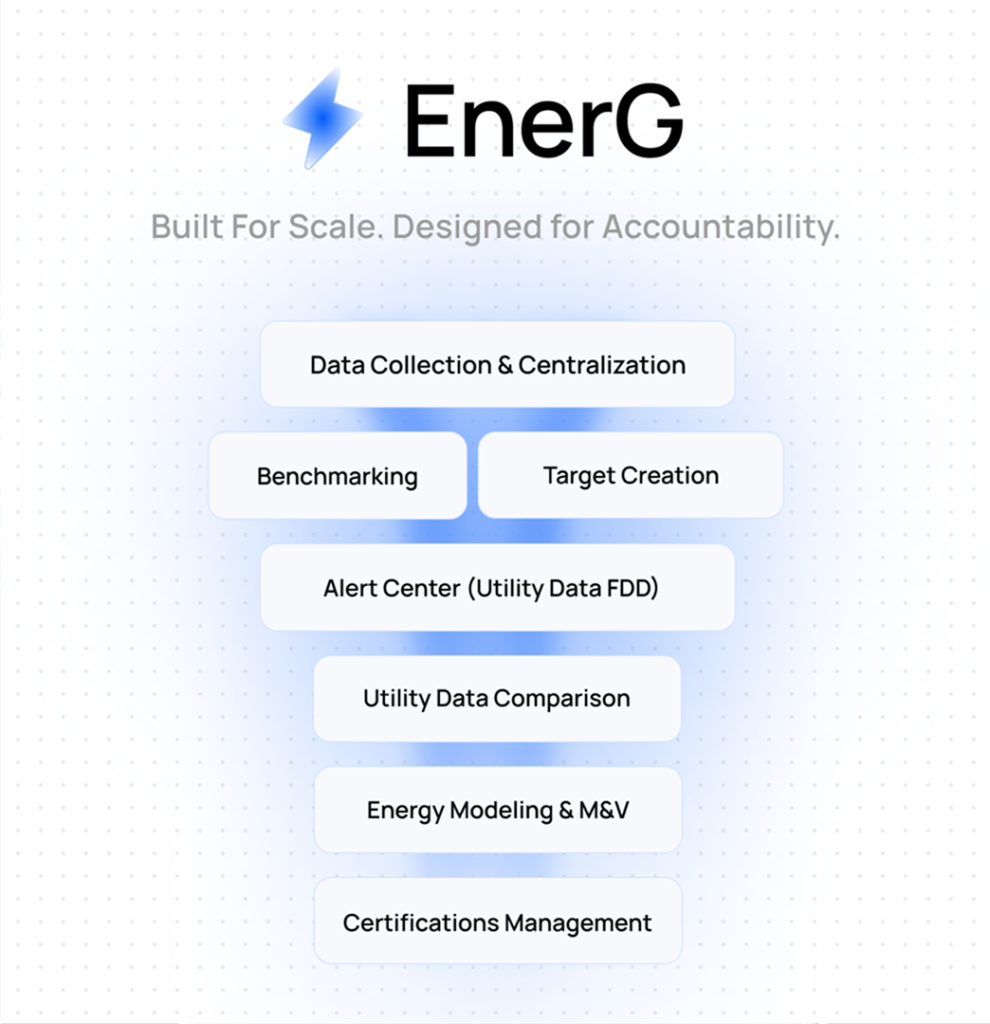
EnerG transforms fragmented utility and sustainability data into a centralized intelligence layer designed for enterprise decision-making.
Your data remains yours.
EnerG acts as a secure aggregation and processing layer, making validated intelligence accessible across your cloud platforms, enterprise systems, and reporting environments.
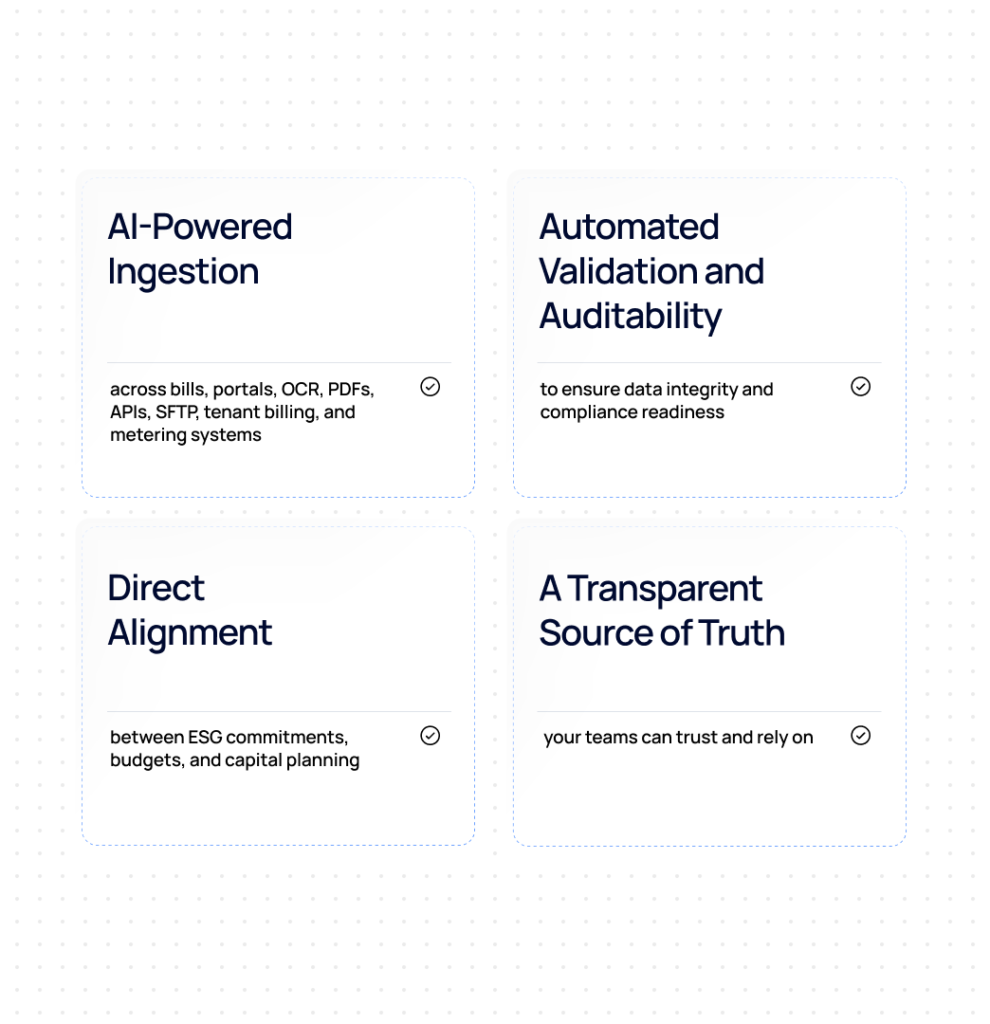
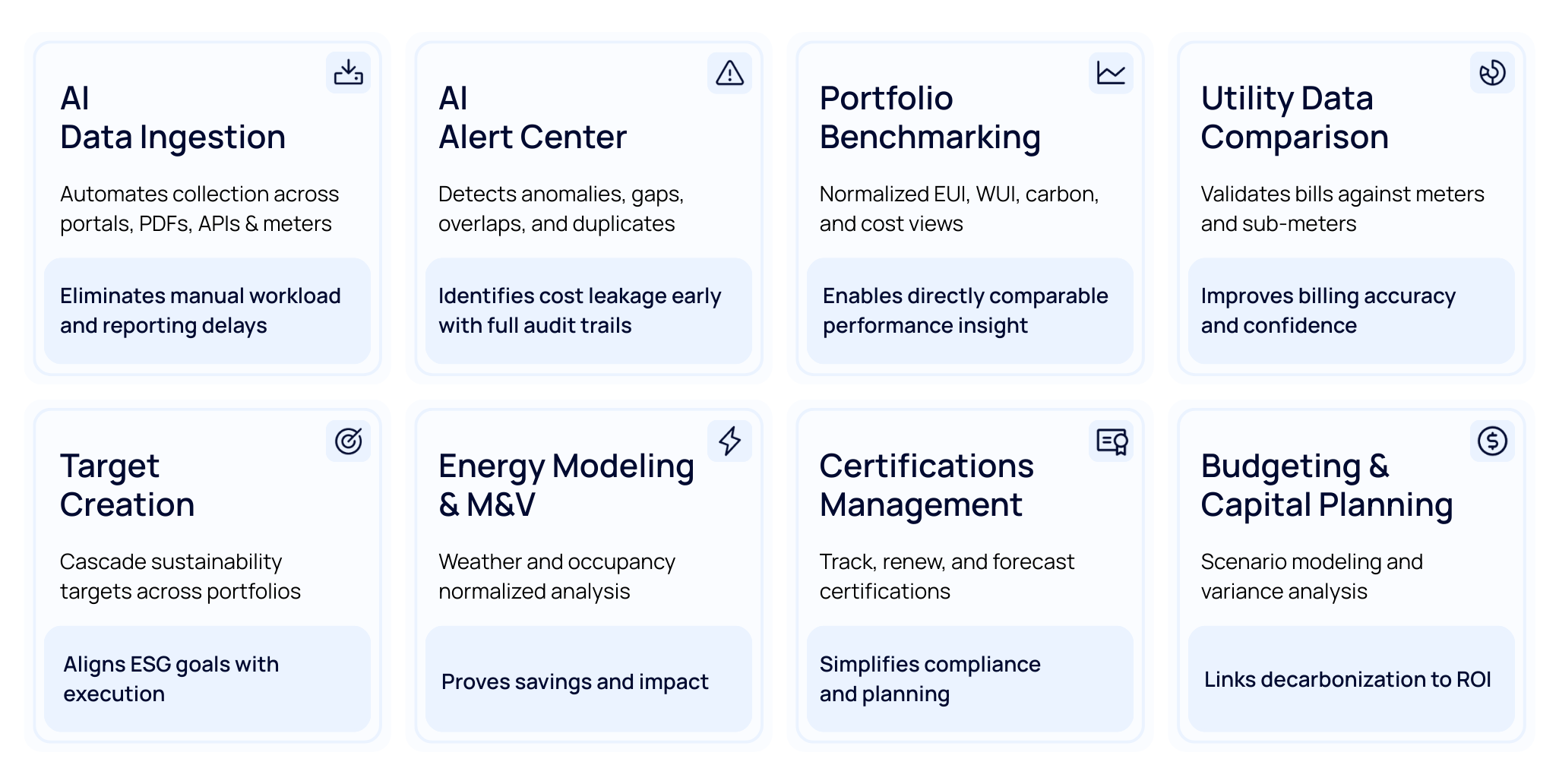
Built to scale. Designed for Accountability.
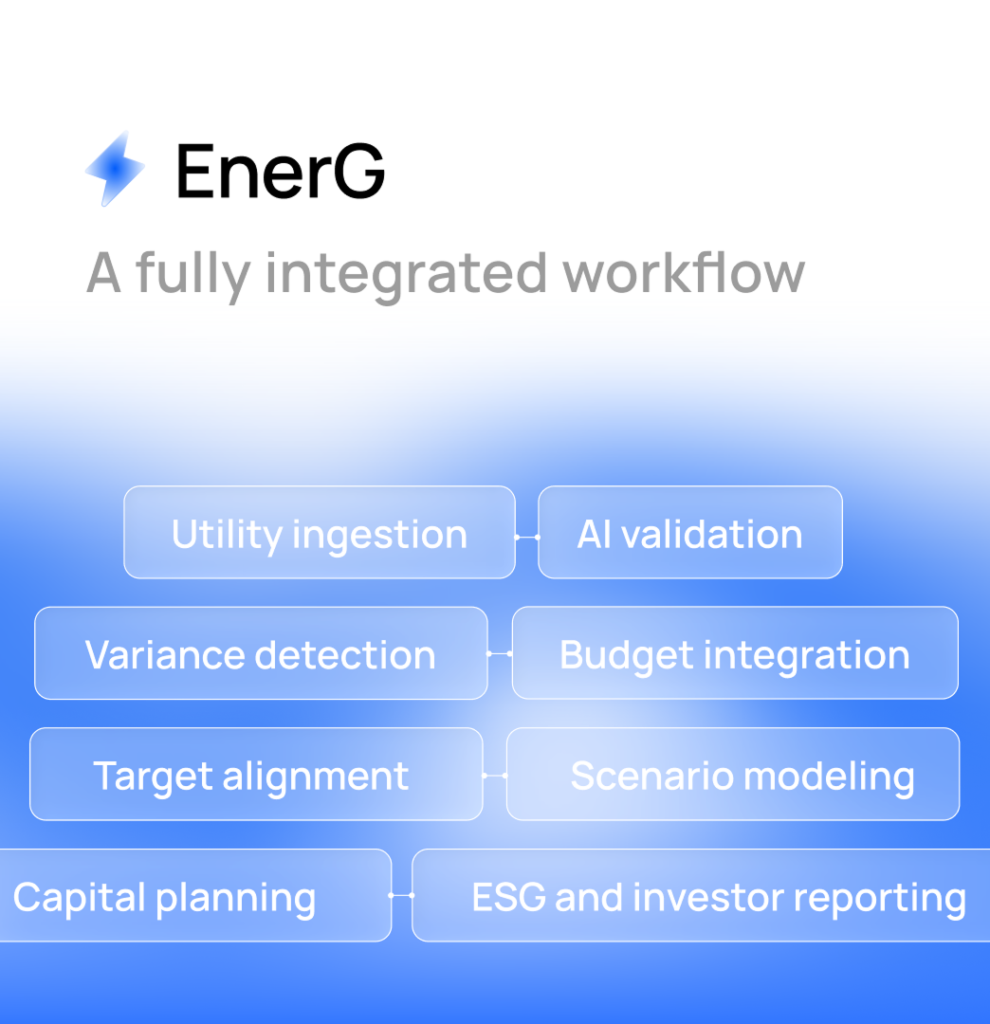
EnerG supports a fully integrated utility intelligence workflow:
Utility ingestion → AI validation → Variance detection → Budget integration → Target alignment → Scenario modeling → Capital planning → ESG & investor reporting
No handoffs.
No spreadsheets.
No blind spots.
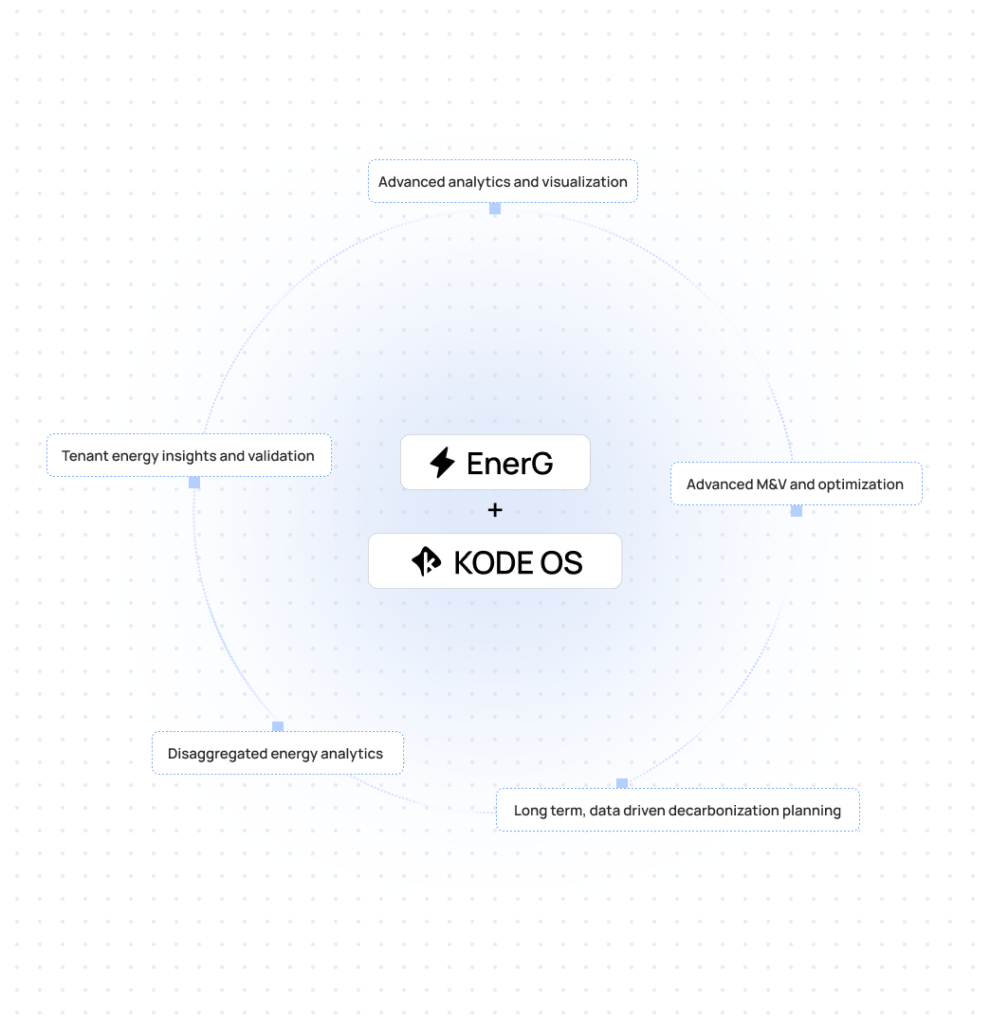
Available as a standalone solution for utility-focused teams, EnerG shines when deployed alongside KODE OS, unlocking:
EnerG established the trusted Intelligence layer. KODE OS turns that intelligence into action.
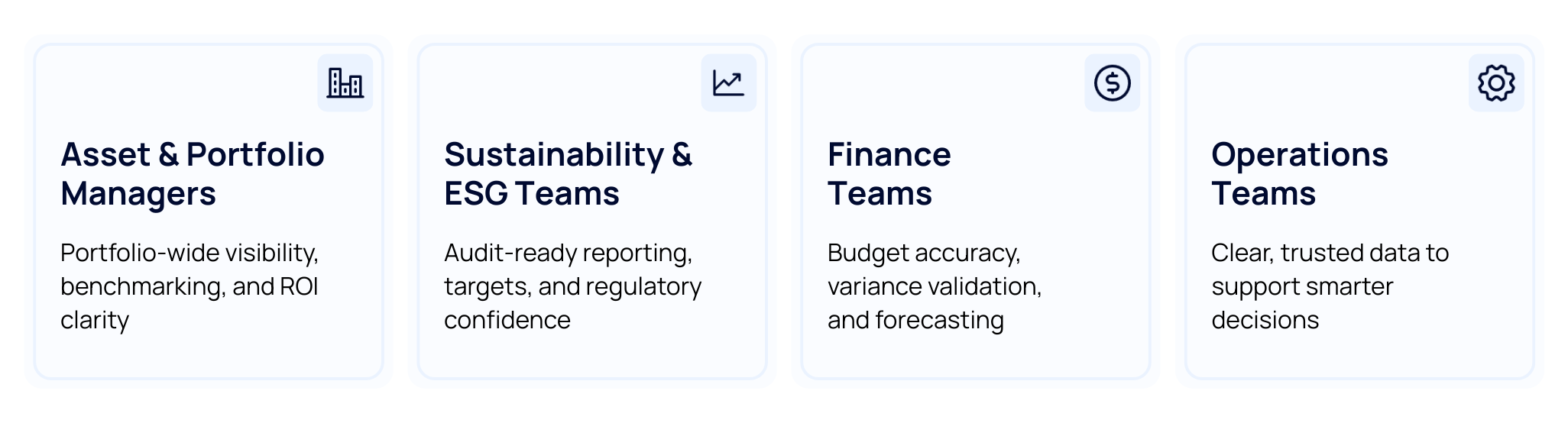
Clarity, Control and Trust. Across Every Role
KODE Labs supports global portfolios across commercial, enterprise, and public sector real estate.
KODE Labs is trusted by:
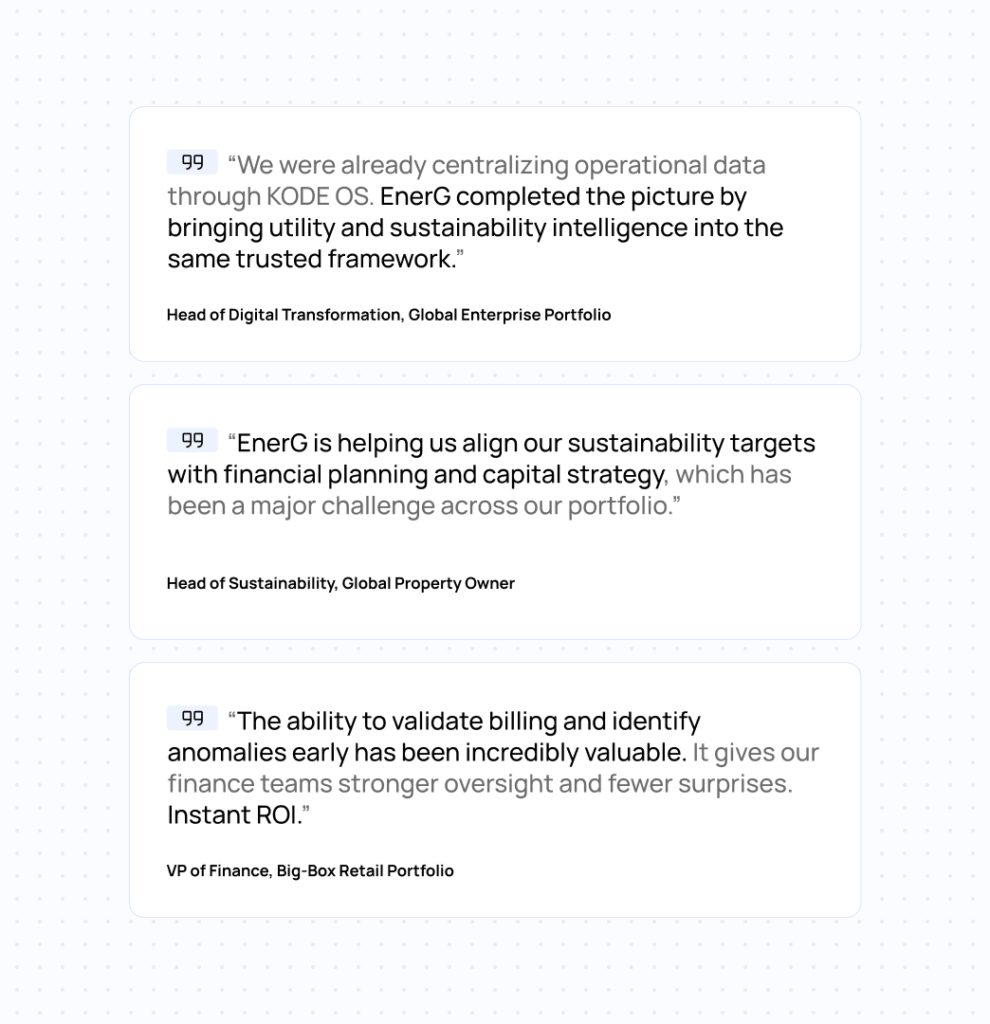
EnerG replaces fragmented utility workflows with a centralized, AI-powered intelligence solution built for transparency, accountability, and scale.
Give your teams confidence in their data and the clarity to act across energy, cost, and carbon performance.
What Teams Typically Ask Before Getting Started
Yes. EnerG is built with enterprise-grade security, encryption, and role-based access controls. The platform maintains full audit trails for data validation and reporting transparency, ensuring compliance with ESG, regulatory, and investor reporting requirements. Your data remains yours at all times, and EnerG is designed to integrate securely with your existing enterprise cloud and reporting environments.
EnerG supports multi-method data ingestion including secure portal connections, AI-enhanced OCR for PDF bills, APIs, SFTP, tenant billing integrations, and third-party metering systems. This flexibility allows organizations to tailor data collection to their infrastructure without disrupting existing workflows.
EnerG uses AI to automate data ingestion, detect anomalies, identify billing discrepancies (such as gaps, overlaps, or duplicates), and power variance analysis across meters and accounts. AI enhances speed and accuracy, but always within a transparent, auditable framework designed for enterprise governance.
Yes. EnerG leverages interval meter data and automated variance analysis to validate billing accuracy, detect discrepancies, and identify potential cost leakage. The AI-driven Alert Center flags issues early and maintains a complete audit trail for accountability.
Absolutely. EnerG centralizes utility and sustainability data into a single source of truth, helping organizations prepare audit-ready ESG, investor, and regulatory reports. Built-in data completeness verification ensures reporting readiness and compliance confidence.
No. EnerG is designed for enterprise real estate portfolios of all types, whether assets are fully digitized or operate with older infrastructure. It focuses on centralizing and validating utility and sustainability data, independent of the building’s systems and infrastructure.
EnerG was designed with transition in mind. KODE Labs supports secure migration of historical utility data, onboarding, and training to ensure continuity and minimal disruption. Many enterprise clients have adopted EnerG as a standalone solution or integrated it alongside KODE OS.
Yes. EnerG operates as a standalone utility intelligence solution and integrates seamlessly with KODE OS. It can also share validated data across internal data platforms, ERP systems, sustainability reporting tools, and enterprise cloud environments.
Organizations typically begin seeing improved data visibility and validation immediately after ingestion and onboarding. Because EnerG automates previously manual workflows, many teams experience faster reporting cycles and increased confidence within the first reporting period.
Your resource to everything you need to know about smart building operating systems
Resources
Originally posted on Mann Report Ask your facility manager how many vendors currently have remote access to your building. Most cannot answer. That is not negligence. The list was assembled one purchase order at a time over 15 years, and nobody has ever been asked to compile it. A typical Class A property runs somewhere […]
Read more
Originally published on Facility Executive. Integration and expanded policy mean federal building management platforms now require the same heavy security apparatus as sensitive data systems. – by Saruf Alam There’s a scene playing out across more and more federal facilities. A facilities team stands up a new analytics layer or a fresh building management platform. […]
Read more
Originally published on The Capitol Forum. “When we began pursuing FedRAMP High authorization, we assumed the biggest challenge would be proving our platform was secure enough for the federal government. We were wrong. The hard part wasn’t cybersecurity. It was access.” – Etrit Demaj FedRAMP, the Federal Risk and Authorization Management Program, is the security […]
Read more
Verdantix has named KODE Labs a Leader in its Green Quadrant: Unified Building Orchestration Platforms (2026). More important than the recognition itself is what the category says about where building operations are going next. Answer Card (TL;DR) Unified building orchestration brings connected systems, shared data context and operational workflows together so teams can coordinate actions […]
Read more
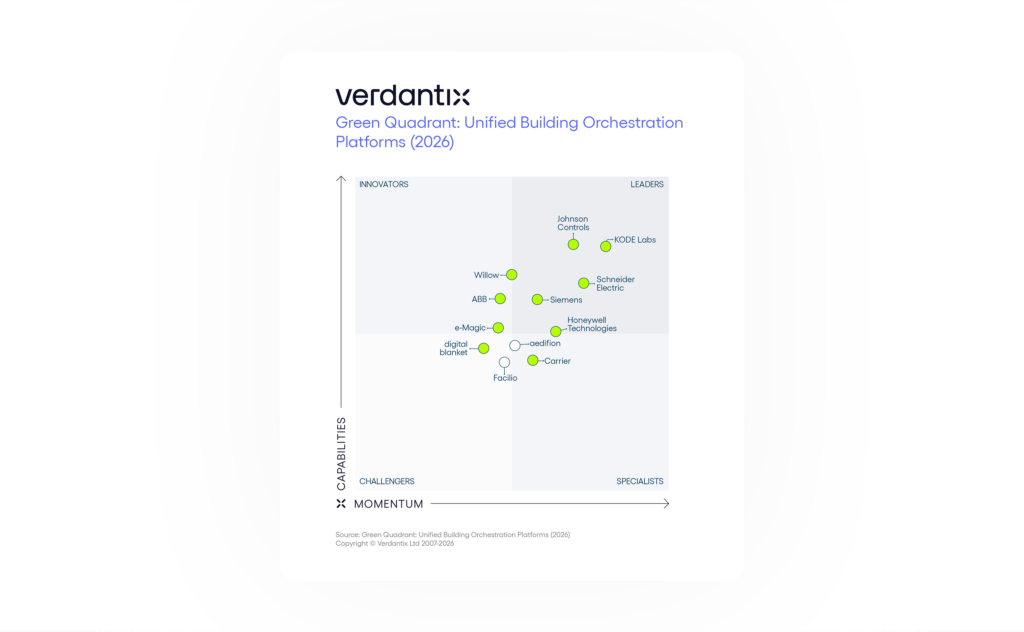
Independent research recognizes KODE OS as the building operating system connecting fragmented systems, data and workflows across complex real estate portfolios DETROIT, MI — October 6, 2026 — KODE Labs, the company building the intelligence infrastructure for the physical world, today announced that it has been named a Leader in the Verdantix Green Quadrant: Unified […]
Read more
September was about closing the gap between seeing and acting. Operational teams aren’t short on signals. Faults surface in FDD. Alarms come from access control and building automation. Meter readings arrive from smart meters, manual rounds, and utility portals. Compliance data lives in ENERGY STAR Portfolio Manager. And the cameras watching the building often sit […]
Read more
More systems connected. Faster paths from data to action. September expands the KODE OS integration ecosystem across building automation, access control and security, metering, and maintenance management. From adding remote control to one of the industry’s most widely deployed building automation platforms to bringing access events, utility meter data, and maintenance activity into the same […]
Read more
AI is quickly becoming part of the building technology conversation, but AI-ready operations require more than adding a new interface to existing building software. Everyone is focused on how easy it is to ask AI a question, but the prompt box is only the visible part of that experience. For AI to be genuinely useful […]
Read more