On this page
Subscribe to receive the latest blog posts to your inbox every week.
By subscribing you agree to with our Privacy Policy.
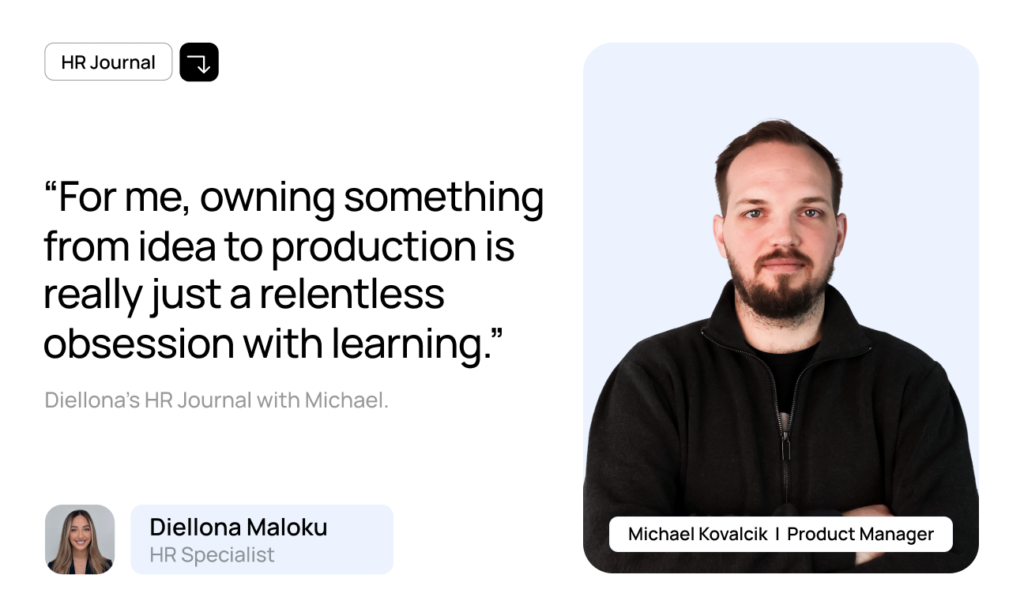
For product managers, especially in complex environments like smart buildings, results depend on how well teams move from idea to execution to measurable outcomes. There’s no room for handoffs or misalignment.
In this edition of HR Journal, we sit down with Michael Kovalcik, Product Manager for the Diagnostics team at KODE Labs, to break down what ownership works in practice. Michael walks through how ideas move from concept to production and what it takes to ensure they deliver outcomes that matter.
Most ideas start with clients: a pain point, problem, or opportunity that impacts their business. That leads to in-depth research on our industry and related industries to see who else has this problem, what the business impact is for the client, whether it has been solved before, and what the best practices are.
We bring all that together with design, engineering, and AI to create initial solutions. We run tests with data and design prototypes involving our clients until we lock in a solution with product-market fit. This kicks off an engineering cycle, and my focus turns towards the go-to-market.
From start to finish, what is the message, training, and material needed across marketing, sales, implementation teams, client experience, end users, and executives? How do we shape that narrative and align each team to what we’re building and why?
When we launch, it’s all about listening to users and measuring outcomes. Is our solution working? Did we cover all the complexities of real buildings, real user workflows, and edge cases? And so the cycle repeats itself, and we start again with the client, their feedback, and their use case to see how we can improve.
On any given day, I’m juggling 3-5 different parts of this flow and switching hats from client to business strategist to building engineer to software engineer, and everything in between. That’s the part that I love, the opportunity to own from idea to outcome.
For me, owning something from idea to production is really just a relentless obsession with learning. It means being obsessed with our clients, our industry, our users, technology, and storytelling. Learn as much as you can and be truth-seeking.
I start with the client outcome in mind and work backward through UI/UX, technology, and engineering, all the way to the data enablement that powers the feature. At every step, always questioning what the user needs at this phase, how best to drive the user outcome, and having fun diving into each and every question to better understand the business.
The concept of ownership is foundational to our team and to KODE Labs, and it means Product, Engineering, and Design work collaboratively to craft the solutions end-to-end. The engineering and design teams are the first to hear what the client thinks and occasionally join calls to hear the feedback directly. We use prototypes and run tests using real data to validate our ideas and stay in sync, both internally and externally, on short-term delivery and long-term vision.
Our Diagnostic software uses data from the building to automatically identify leading causes of energy waste, occupant comfort, or mechanical longevity within buildings. A typical building can have hundreds or thousands of these issues, so we’re working on a feature to automatically rank each fault.
I’m excited because, first, the client impact is huge once we start communicating exactly which high-value issues are worth solving, and the journey to get here was also awesome. It involved learning the fundamental physics of how energy is consumed within buildings, solving data scalability issues across a diverse range of equipment, addressing technical challenges related to metrics and KPIs, and tying it all into an intuitive front-end experience that works on both web and mobile.
At KODE, we trust our team to execute, and we even have a core value that innovation is rewarded, but execution is worshipped. It means everyone is given the opportunity to own their role, and when you crush it, you’re given bigger goals and better opportunities. It’s been awesome working with a group of ambitious people who rise to the challenge, take on these opportunities, and see how much we have grown personally, professionally, and as a company.
Michael’s perspective makes one thing obvious: the difference between shipping features and delivering outcomes comes down to one thing: end-to-end ownership. At KODE, ownership means taking full accountability from idea to outcome.
From the first client conversation to post-launch performance, the expectation is clear: understand the problem deeply, build with intention, and stay responsible for the outcome. That requires tight alignment across product, design, and engineering, and a constant loop of learning and iteration.
Coming soon, another HR Journal conversation. Stay tuned!

Diellona Maloku
HR Specialist, KODE Labs
News, insights and resources from the world of smart building management.
By clicking "Sign Up" you're confirming that you agree with our Terms and Conditions.
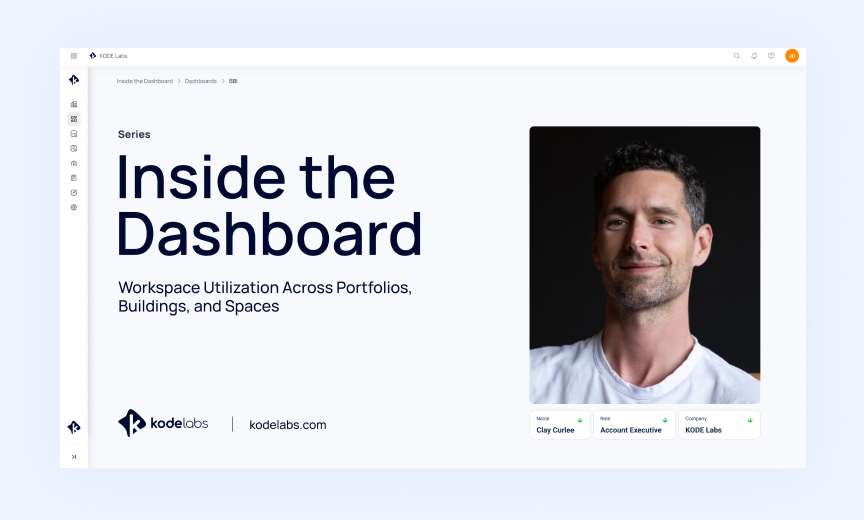
What does the Workspace Occupancy & Utilization dashboard do? The Workspace Occupancy & Utilization dashboard provides a unified view of…
Read more
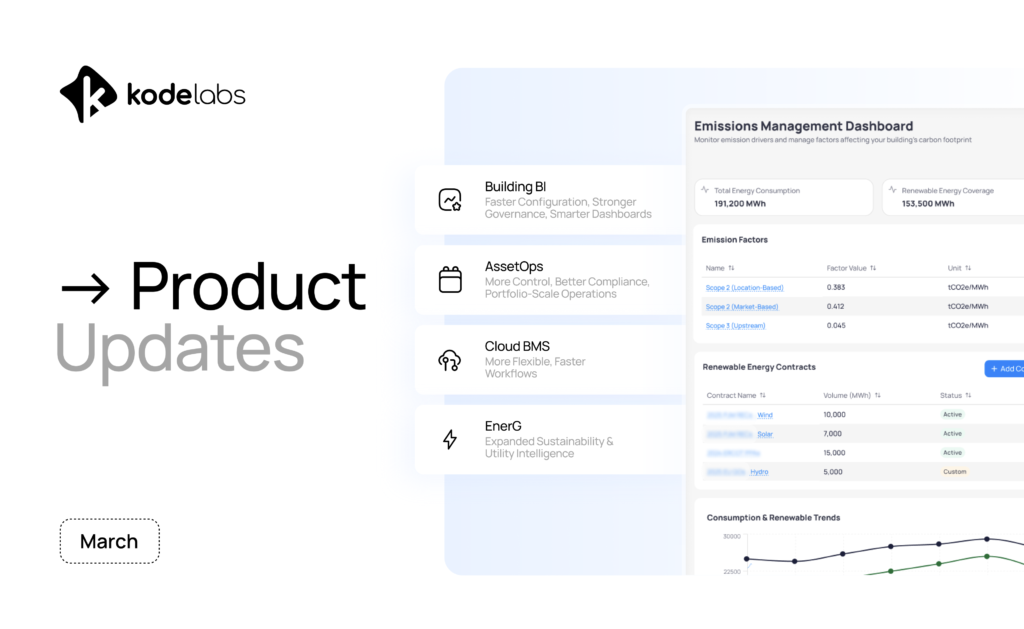
March at KODE was all about scale, control, and visibility. This month, we focused on making KODE OS easier to…
Read more
March expands the KODE OS integration ecosystem with new systems and updates, increasing visibility across security, energy, maintenance, and workplace…
Read more