The latest from KODE
Your resource to everything you need to know about smart building operating systems
Resources

Utility data was never designed for today’s real estate portfolios.
As sustainability expectations rise, reporting requirements expand, and portfolios scale globally, many organizations still rely on disconnected portals, PDFs, spreadsheets, and manual workflows to manage utility data. The result:
For enterprise teams, this creates real risk: unreliable reporting, missed savings, and slower decision-making, exactly where confidence matters most.
EnerG didn’t start as a feature roadmap.
It started as a client problem.
Over the past 15 months, KODE Labs worked closely with enterprise real estate organizations and partners navigating growing complexity across utility, sustainability, and financial reporting.
Teams already trusted KODE OS to unify building operations, and asked for the same level of transparency, auditability, and scalability applied to utility data.
EnerG was built from this collaboration.
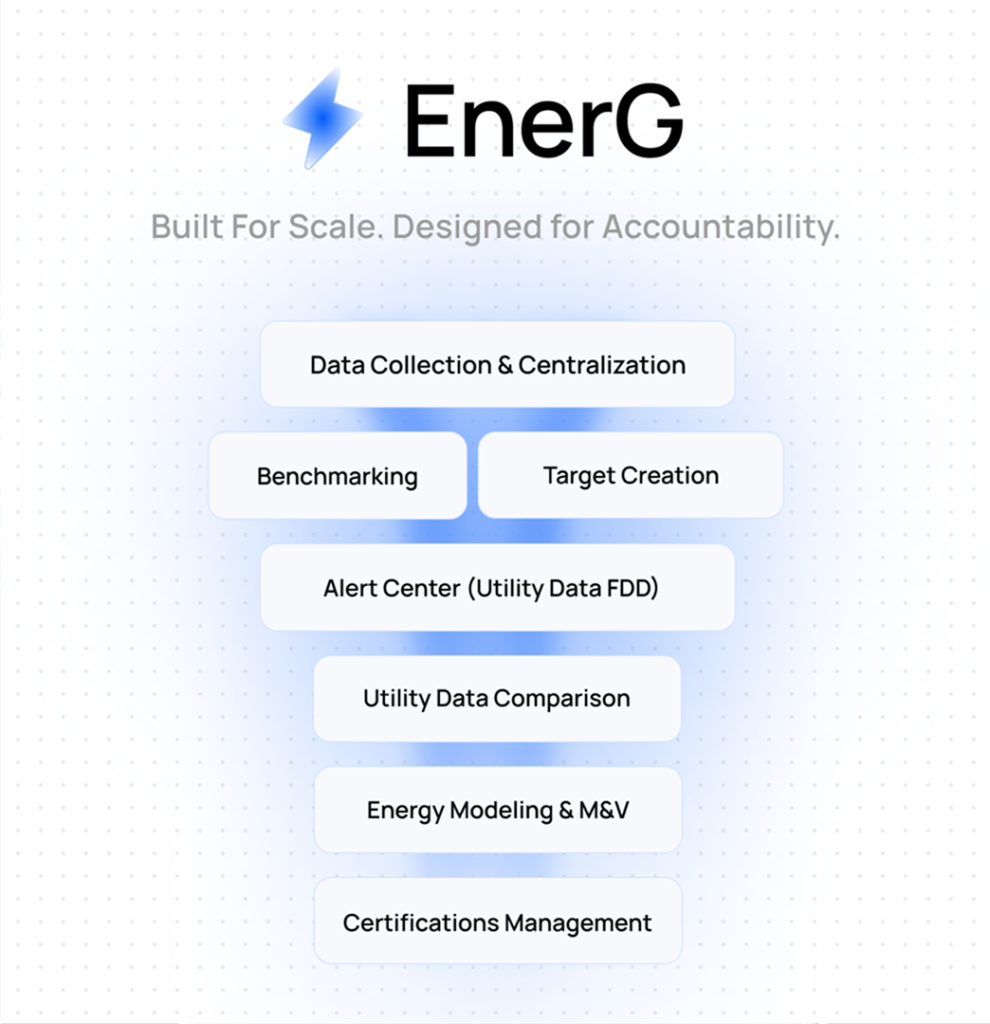
EnerG transforms fragmented utility and sustainability data into a centralized intelligence layer designed for enterprise decision-making.
Your data remains yours.
EnerG acts as a secure aggregation and processing layer, making validated intelligence accessible across your cloud platforms, enterprise systems, and reporting environments.
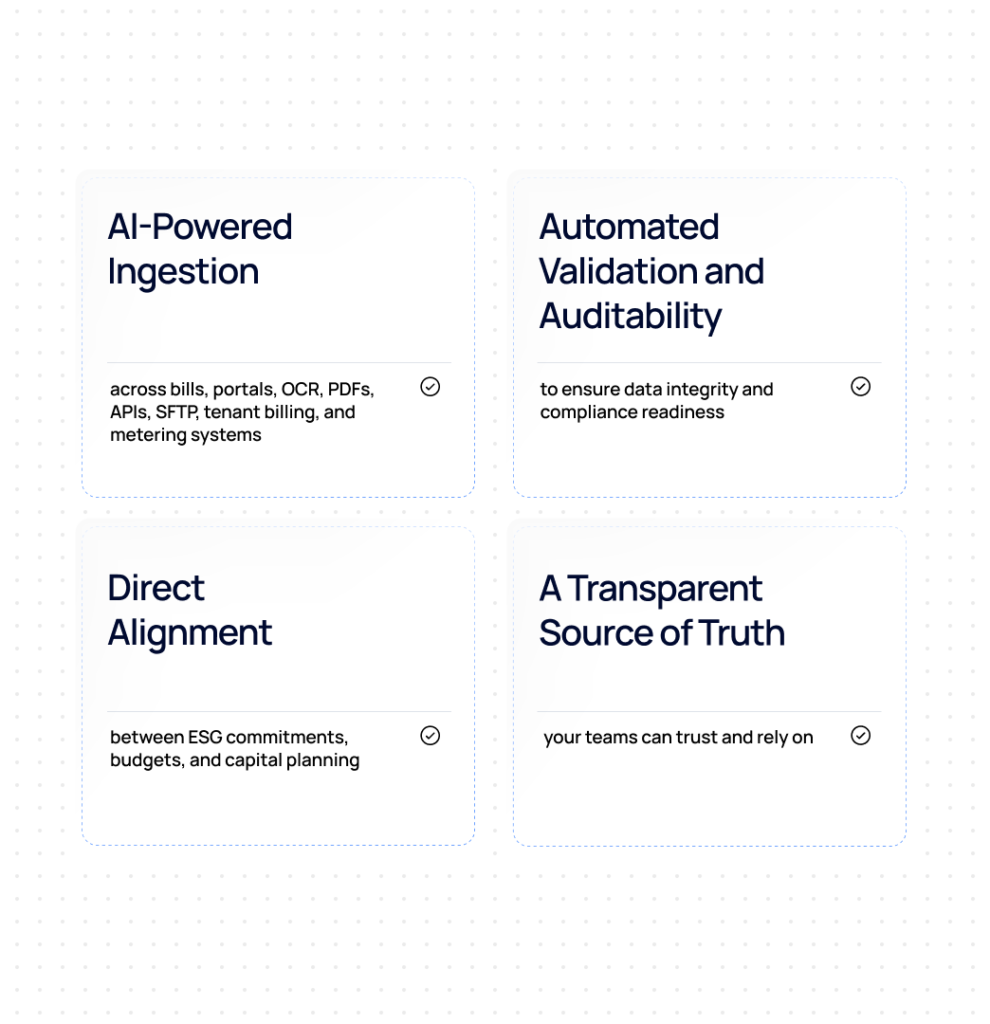
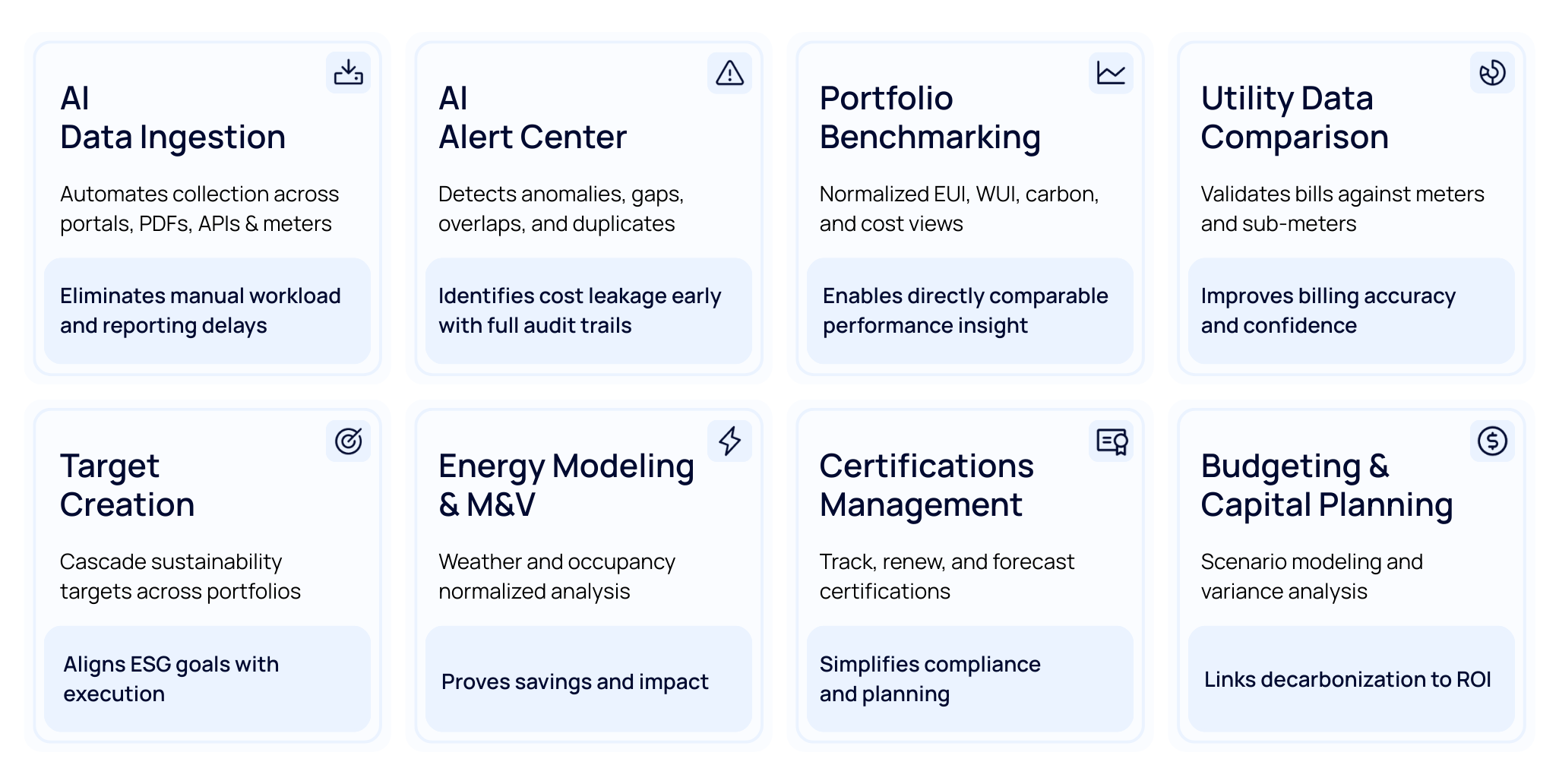
Built to scale. Designed for Accountability.
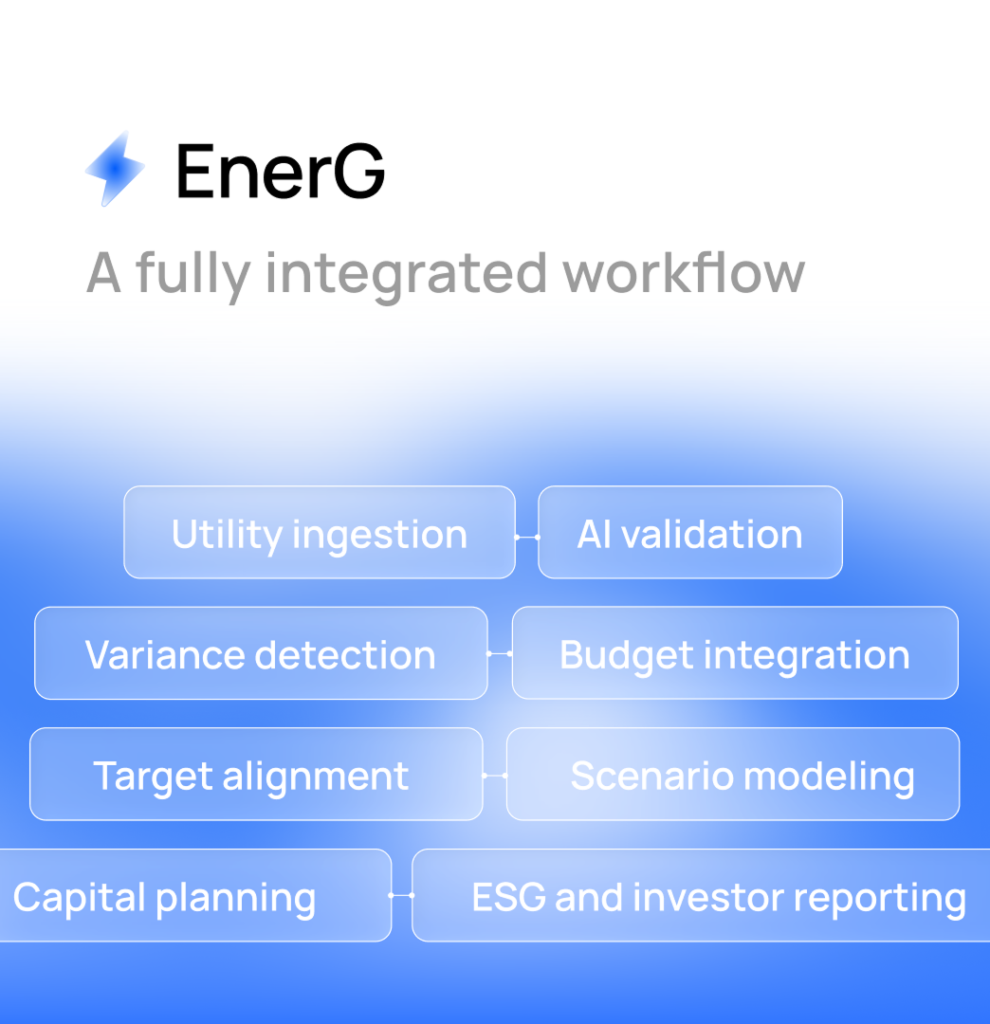
EnerG supports a fully integrated utility intelligence workflow:
Utility ingestion → AI validation → Variance detection → Budget integration → Target alignment → Scenario modeling → Capital planning → ESG & investor reporting
No handoffs.
No spreadsheets.
No blind spots.
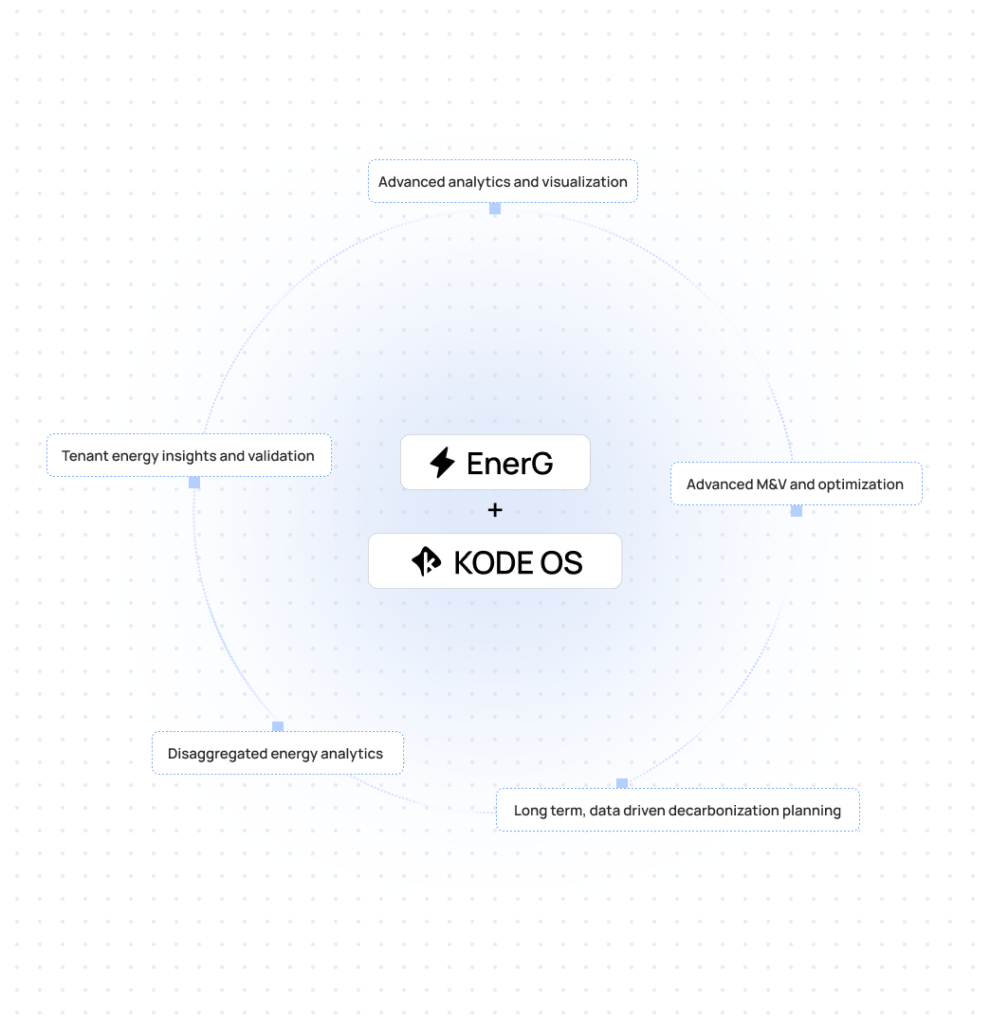
Available as a standalone solution for utility-focused teams, EnerG shines when deployed alongside KODE OS, unlocking:
EnerG established the trusted Intelligence layer. KODE OS turns that intelligence into action.
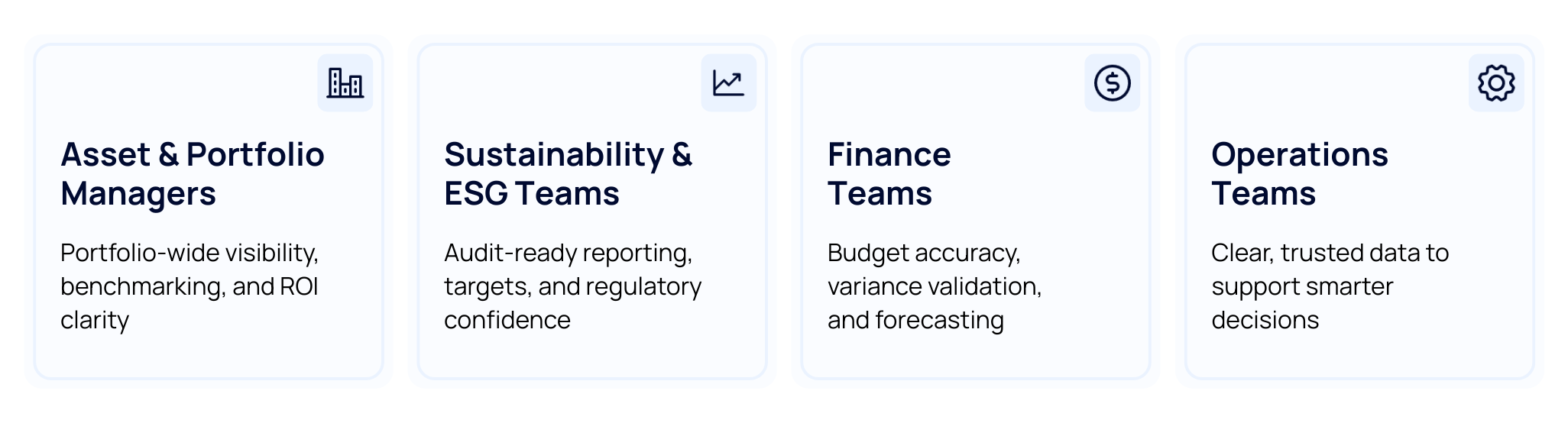
Clarity, Control and Trust. Across Every Role
KODE Labs supports global portfolios across commercial, enterprise, and public sector real estate.
KODE Labs is trusted by:

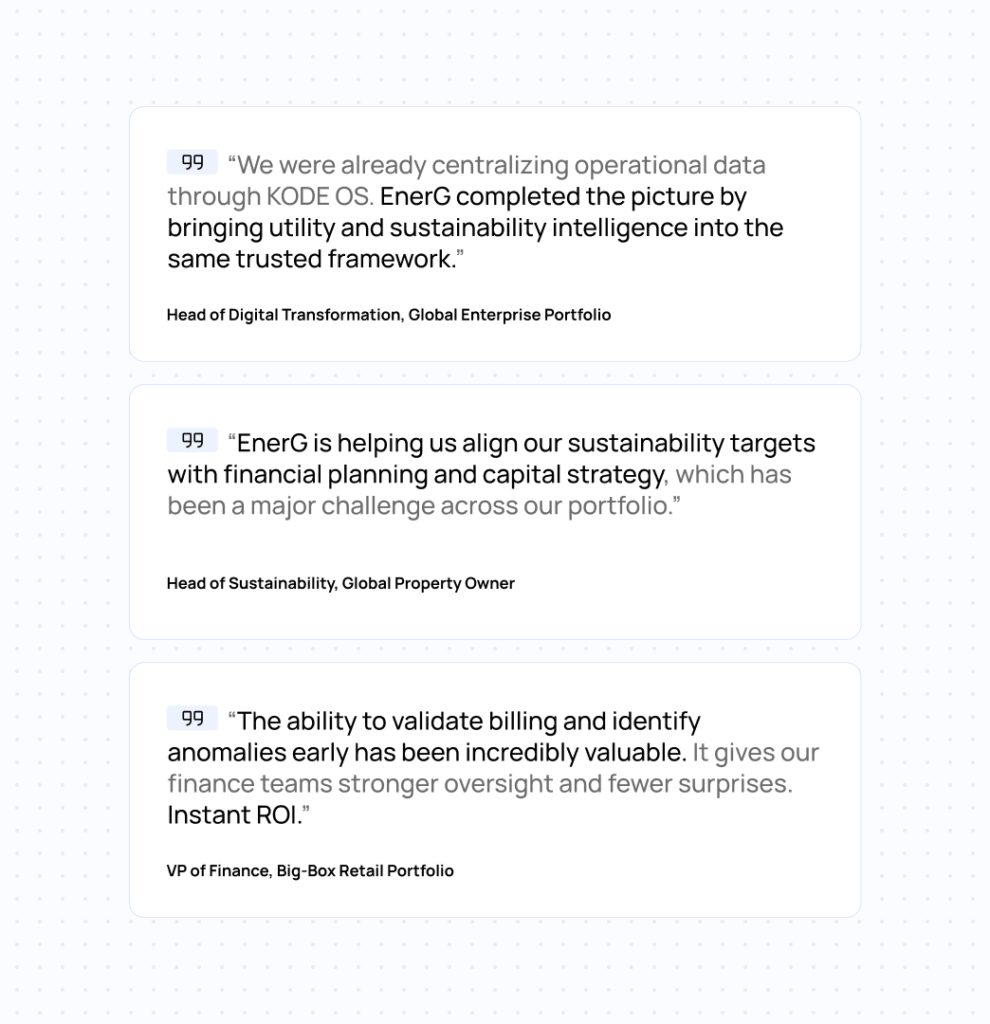
EnerG replaces fragmented utility workflows with a centralized, AI-powered intelligence solution built for transparency, accountability, and scale.
Give your teams confidence in their data and the clarity to act across energy, cost, and carbon performance.
What Teams Typically Ask Before Getting Started
Yes. EnerG is built with enterprise-grade security, encryption, and role-based access controls. The platform maintains full audit trails for data validation and reporting transparency, ensuring compliance with ESG, regulatory, and investor reporting requirements. Your data remains yours at all times, and EnerG is designed to integrate securely with your existing enterprise cloud and reporting environments.
EnerG supports multi-method data ingestion including secure portal connections, AI-enhanced OCR for PDF bills, APIs, SFTP, tenant billing integrations, and third-party metering systems. This flexibility allows organizations to tailor data collection to their infrastructure without disrupting existing workflows.
EnerG uses AI to automate data ingestion, detect anomalies, identify billing discrepancies (such as gaps, overlaps, or duplicates), and power variance analysis across meters and accounts. AI enhances speed and accuracy, but always within a transparent, auditable framework designed for enterprise governance.
Yes. EnerG leverages interval meter data and automated variance analysis to validate billing accuracy, detect discrepancies, and identify potential cost leakage. The AI-driven Alert Center flags issues early and maintains a complete audit trail for accountability.
Absolutely. EnerG centralizes utility and sustainability data into a single source of truth, helping organizations prepare audit-ready ESG, investor, and regulatory reports. Built-in data completeness verification ensures reporting readiness and compliance confidence.
No. EnerG is designed for enterprise real estate portfolios of all types, whether assets are fully digitized or operate with older infrastructure. It focuses on centralizing and validating utility and sustainability data, independent of the building’s systems and infrastructure.
EnerG was designed with transition in mind. KODE Labs supports secure migration of historical utility data, onboarding, and training to ensure continuity and minimal disruption. Many enterprise clients have adopted EnerG as a standalone solution or integrated it alongside KODE OS.
Yes. EnerG operates as a standalone utility intelligence solution and integrates seamlessly with KODE OS. It can also share validated data across internal data platforms, ERP systems, sustainability reporting tools, and enterprise cloud environments.
Organizations typically begin seeing improved data visibility and validation immediately after ingestion and onboarding. Because EnerG automates previously manual workflows, many teams experience faster reporting cycles and increased confidence within the first reporting period.
Your resource to everything you need to know about smart building operating systems
Resources
Originally published on Leadership Today To redesign work for AI, leaders have to look beyond adding new technology to existing jobs and processes. AI changes which tasks can be automated, which decisions can be accelerated, where human judgment creates the most value, and how work should move across an organization. Many companies have not yet made […]
Read more
For commercial real estate owners, utility costs are easy to think of as a monthly expense to reconcile, report and move on from. Across a large portfolio however, the picture is more complicated. The distance between utility spend and utility savings is where most of the recoverable money sits. Utility cost appears in operating budgets, […]
Read more
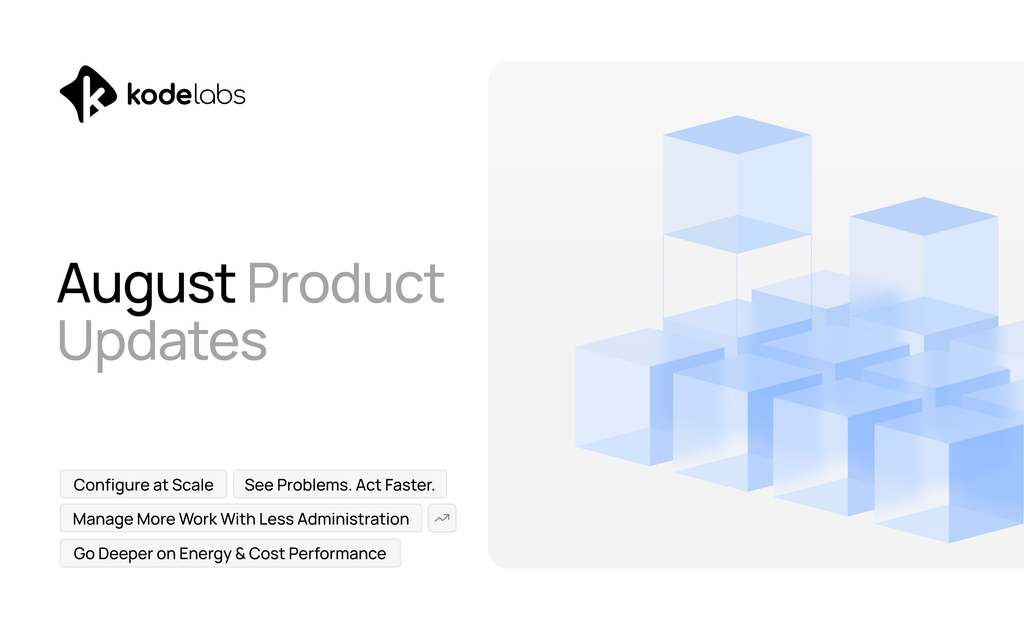
August was about making scale easier. As portfolios grow, operational complexity grows with them. More maintenance work needs to be managed. More portfolio data needs to be understood. And energy, financial, and sustainability teams need clearer ways to turn increasingly complex information into decisions. August introduces a set of KODE OS enhancements designed to make […]
Read more
More systems connected. More building context in one place. August expands the KODE OS integration ecosystem across building automation, access control, security, metering, power monitoring, and workplace systems. From connecting two of the industry’s major building and power management platforms to bringing access events and workplace schedules into the same operational environment, this month’s integrations […]
Read more
Corporate real estate teams now connect more systems and have access to more building data than ever. Dashboards can surface energy use, alarms, work orders, equipment performance, occupancy, and comfort conditions across entire portfolios. Visibility alone does not improve operations. Seeing that something happened is different from knowing why it happened, who is responsible for […]
Read more
Every day, Corporate Real Estate leaders make decisions that affect hundreds of people, multiple buildings, and millions in operational costs. To make those decisions confidently, they need a complete view of portfolio performance. When information is spread across different buildings, systems, and teams, identifying priorities quickly becomes a challenge. With KODE OS, portfolio data, building […]
Read more

Ask a corporate real estate leader how their facilities management provider is performing, and the answer usually traces back to a single source: a report the provider wrote about itself. The monthly scorecard. The SLA summary. The work order completion rate. All of it produced by the party being evaluated, from systems the client cannot […]
Read more
A Corporate Facilities Management leader rarely spends the day inside a single building. Instead, they’re coordinating maintenance teams, responding to operational issues, balancing priorities across dozens or even hundreds of sites, and making decisions that keep the entire portfolio running efficiently. Every decision depends on having the right operational context. When building systems, maintenance records, […]
Read more