On this page
Subscribe to receive the latest blog posts to your inbox every week.
By subscribing you agree to with our Privacy Policy.
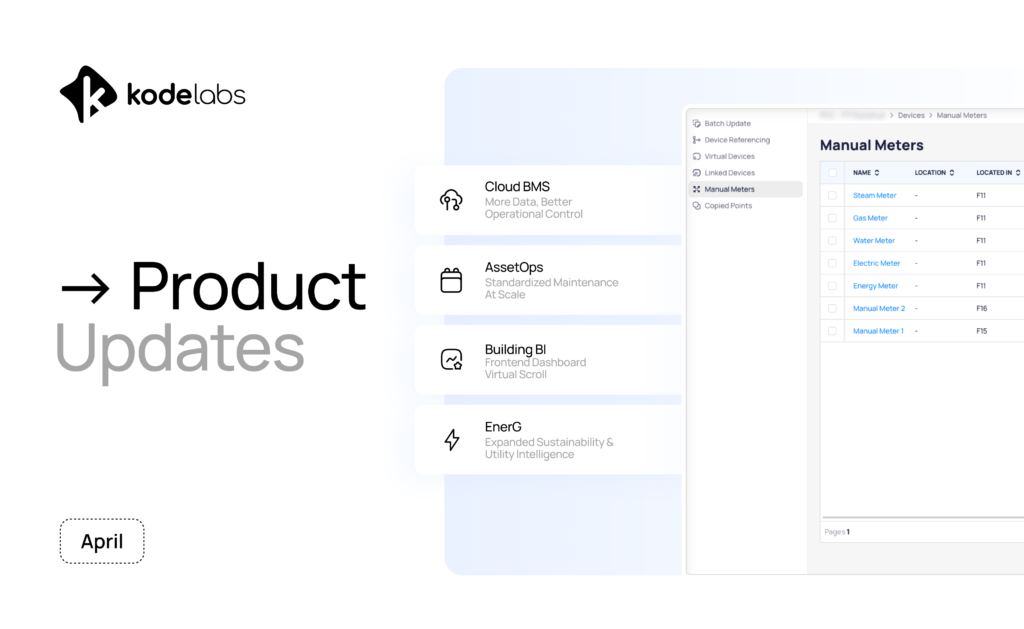
April was about bringing more intelligence into operations.
This month, we introduced new capabilities that configure assets at scale, bring disconnected data into KODE OS, and strengthen emissions and utility intelligence inside EnerG.
From faster dashboard performance to GHG-aligned emissions accounting, these updates are designed to help teams operate with more context, control, and confidence.
Here’s what shipped.
Cloud BMS continues to expand with enhancements that improve data completeness, accelerate deployment, and strengthen operational control.
Bring unconnected meter data into KODE OS so manual readings can live alongside connected meters, analytics, and reporting — without relying on spreadsheets.
Teams can now import devices and points via structured spreadsheets before live connectivity is available, enabling building modeling and configuration work to begin earlier.
Standardized point bounds help surface out-of-range values, while a new unit conversion foundation supports more consistent calculations across compatible units.
AssetOps continues evolving with stronger governance and new tools for standardizing work across portfolios.
Define custom priorities, response targets, escalations, and SLA indicators directly in the platform.
Updated import templates now pull in preconfigured asset types, site areas, and vendor relationships to reduce data entry errors.
Create reusable task groups once and apply them across schedules to standardize maintenance planning at scale.
Building BI continues improving performance as dashboards grow more complex.
Dashboards now render only visible elements (plus a small buffer), dramatically improving performance for larger dashboards.
EnerG continues expanding with new capabilities for emissions accounting, normalization, and reporting.
New emissions factor management and expanded Scope 1, 2, and relevant Scope 3 support bring deeper governance into emissions accounting.
Enhanced modeling and normalized performance views improve benchmarking and building-level performance insights.
Improved integration supports stronger jurisdictional reporting and data synchronization.
Expanded waste tracking and new CUSUM logic bring deeper visibility into resource performance and major usage shifts.
April expanded the KODE OS integration ecosystem with new integrations and upgrades across workplace, metering, controls, and operational systems. Read about them here.
April expanded our integration layer with new integrations and connector upgrades, improving data coverage and operational visibility across portfolios.
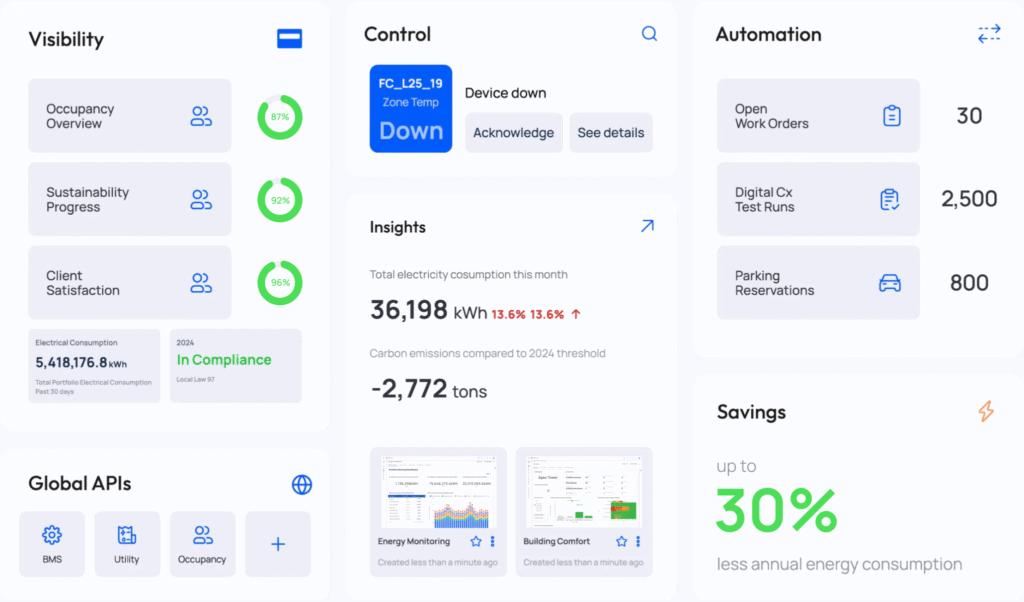
KODE OS connects building systems, data, and workflows into one unified platform, giving your teams (and AI) the context needed to move faster, make better decisions, and drive measurable results.
Explore how it all comes together.
News, insights and resources from the world of smart building management.
By clicking "Sign Up" you're confirming that you agree with our Terms and Conditions.
Verdantix has named KODE Labs a Leader in its Green Quadrant: Unified Building Orchestration Platforms (2026). More important than the…
Read more

AI is quickly becoming part of the building technology conversation, but AI-ready operations require more than adding a new interface…
Read more
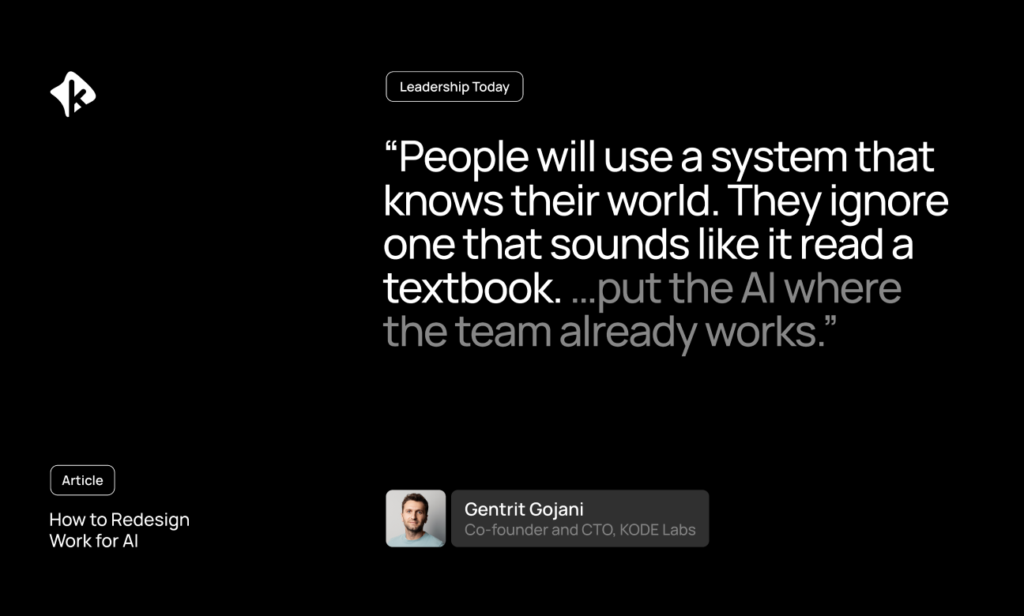
Originally published on Leadership Today To redesign work for AI, leaders have to look beyond adding new technology to existing jobs…
Read more