On this page
Subscribe to receive the latest blog posts to your inbox every week.
By subscribing you agree to with our Privacy Policy.
February was about intelligence at scale.
This month, we officially launched EnerG, expanded preventive maintenance visibility across portfolios, strengthened dashboard governance, and deepened integration coverage across utility and IoT systems.
Here’s what shipped.
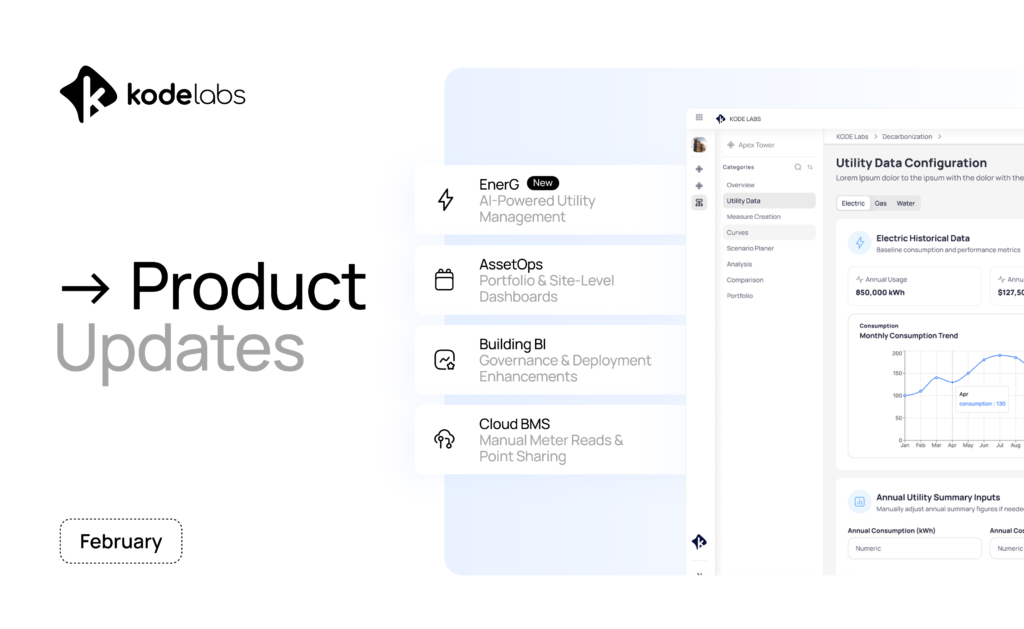
Utility data has long been one of the most fragmented layers in real estate, scattered across portals, PDF bills, spreadsheets, and disconnected SaaS tools.
EnerG changes that.
EnerG is an AI-enabled utility intelligence platform that unifies utility, sustainability, operational, and financial data into a single system of record. It connects cost directly to what’s happening inside the building and across the portfolio, enabling teams to move from:
Cost anomaly → Equipment performance → Verified savings
Already launching with seven-figure enterprise adoption, EnerG represents the next evolution of KODE OS and expands the foundation required for AI-driven utility workflows and advanced portfolio analytics.
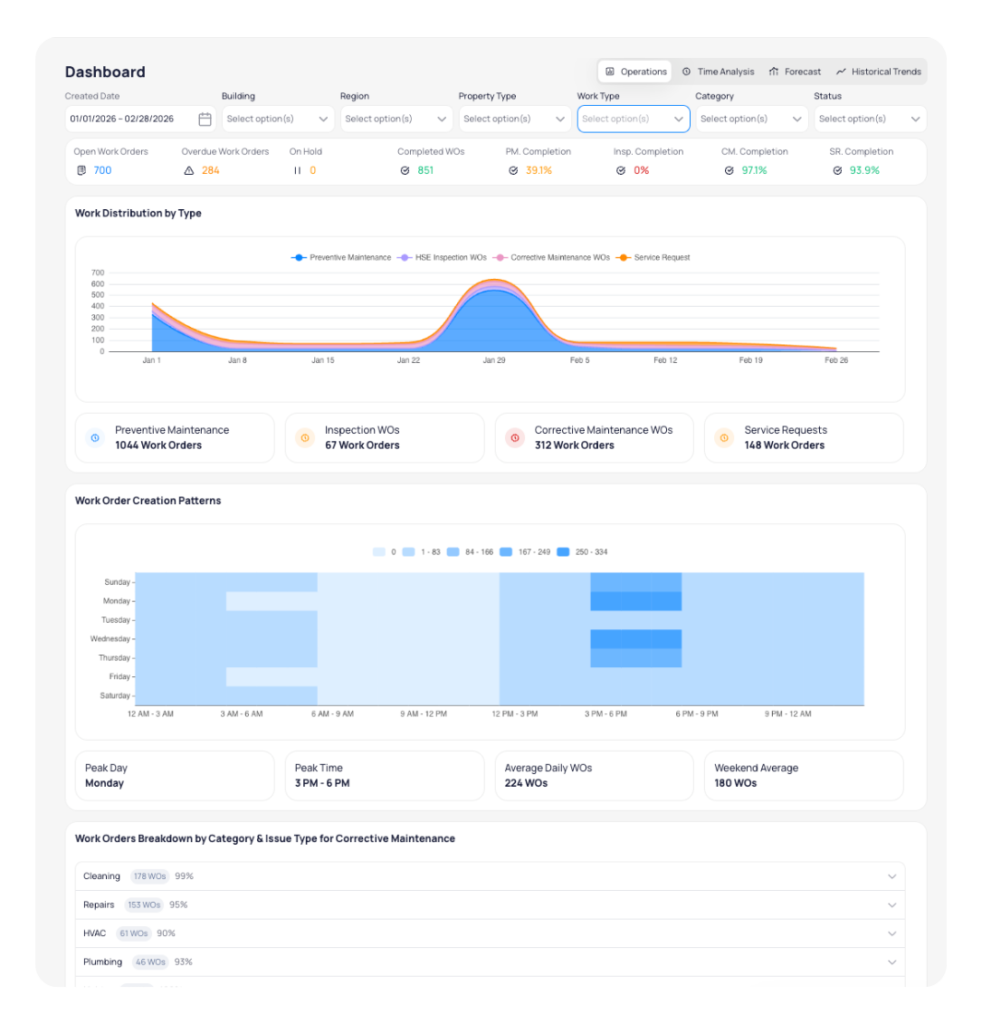
This month, we launched new Portfolio and Site-Level AssetOps dashboards, giving operations and capital planning teams consistent, forward-looking visibility across assets and preventive maintenance performance.
What’s new:
Why it matters:
This release expands AssetOps functionalities to proactive portfolio intelligence.
Bulk Deployment Validation
New validation steps during large-scale dashboard rollouts ensure consistent and accurate displays across sites.
Dashboard Version Optimization
Version history is now capped to the latest 20 revisions to optimize performance. Named versions are stored indefinitely for governance and audit control. These improvements help teams scale dashboards confidently while maintaining performance and oversight.
Manual Meter Reads
New You can now record cumulative electric, water, and gas meter readings via mobile or desktop, including:
Ideal for sites without automated meter feeds or during transitional periods.
Point Sharing Across Devices
Points can now be shared across devices to support global setpoints, sensors, and standardized KPIs across buildings.
Together, these updates improve flexibility in hybrid environments and strengthen global control strategies.
Troubleshooting connection issues just got significantly easier.
We’ve launched a new Connector Onboarding Wizard along with enhanced Error Categorization, designed to simplify setup and dramatically reduce troubleshooting time.
What’s New:
Why it Matters:
This release removes friction from one of the most critical layers of any digital building environment: reliable data ingestion.
February strengthened our integration layer with new API upgrades and secure data ingestion improvements, expanding coverage and improving data fidelity across portfolios. Read about them here.
KODE OS brings building systems, data, and workflows into one place so your teams (and AI) always operate with context, spanning Cloud BMS, Building BI, Digital Maintenance, and more.
If you’re new here, explore how these modules work together to deliver measurable outcomes.
News, insights and resources from the world of smart building management.
By clicking "Sign Up" you're confirming that you agree with our Terms and Conditions.
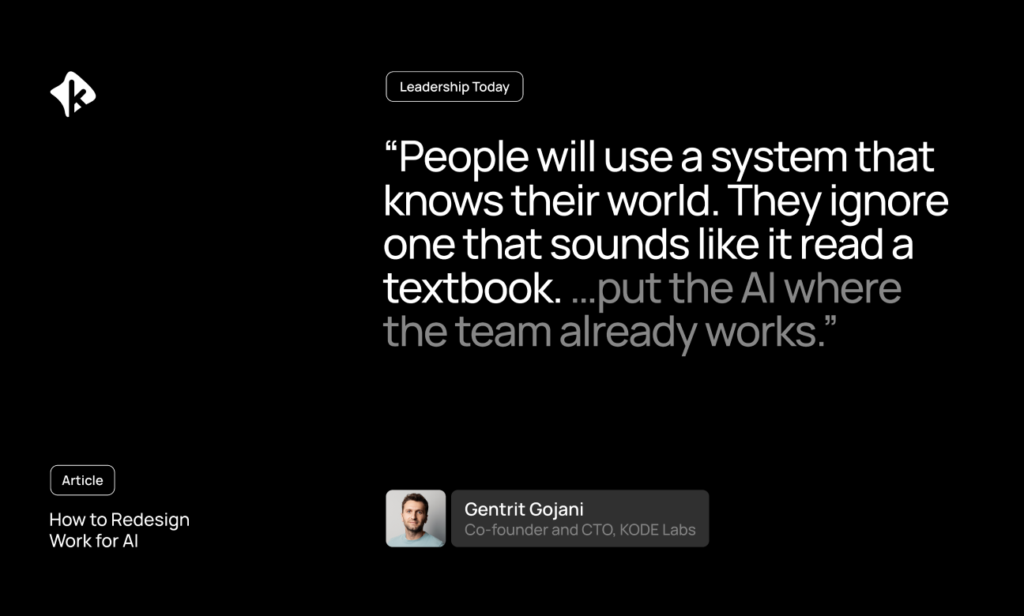
Originally published on Leadership Today To redesign work for AI, leaders have to look beyond adding new technology to existing jobs…
Read more

For commercial real estate owners, utility costs are easy to think of as a monthly expense to reconcile, report and…
Read more
August was about making scale easier. As portfolios grow, operational complexity grows with them. More maintenance work needs to be…
Read more